Summer Nail Trends Australia 2026/27: The Colours to Wear Now
The shades, finishes and shapes defining the Australian summer ahead, and how to wear e...
Read more ›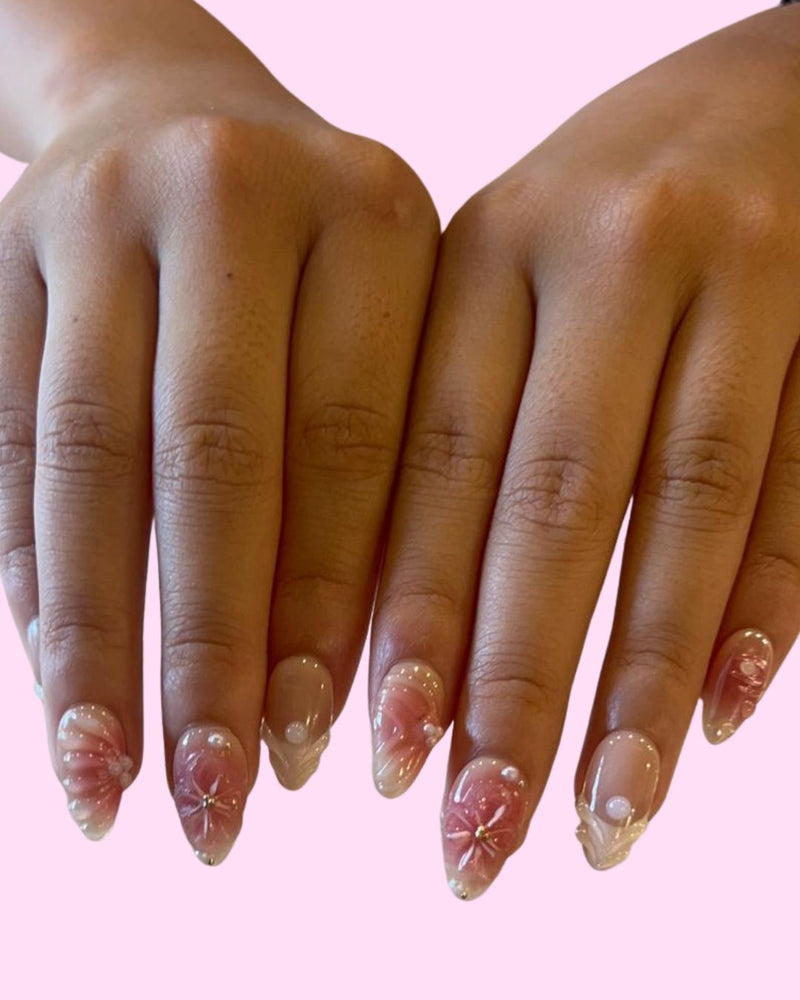
Let us know your email address
You're in! 🎉
Check your inbox for your 10% off code.


Saltwater, chlorine, sunscreen and sand are, between them, about the worst environment a manicure can be asked to survive. Which is exactly when people most want their nails to look good — in the photographs from a trip they have been planning for months.
The answer is not a stronger glue. It is choosing a set built for the conditions, and taking a tube of glue with you. Here is how to get a set through a holiday.
Sunscreen is the worst of them, and the least suspected. The oils in it migrate under the free edge and get directly into the glue bond. Reapplying every two hours for a week is a sustained chemical assault that no adhesive is designed for.
Prolonged warm water. Not a swim — a swim is fine. What costs you is hours in a pool, long showers to rinse off, and the general wetness of a beach day. Cyanoacrylate is weakened by water over time, and heat accelerates it.
Sand. Abrasive, and it works into any gap between nail and sidewall. On an undersized set it acts like a wedge.
Salt and chlorine. Both dry the natural nail and the skin around it, which loosens the seal at the cuticle.
Heat. Hands swell slightly in hot weather, so a set that fitted perfectly at home can feel tight by day three.
The single most useful decision. Short press on nails take less leverage from every knock, and a holiday involves plenty — beach bags, hotel doors, suitcases, sun loungers, car boots.
Rounded shapes matter as much. Almond, round or squoval have no corners to catch on towels, swimwear or a beach bag zip. Coffin and square do, and a caught corner is where lifting starts.
Skip the heavy 3D charms for a beach trip. They catch on swimwear and towels, and sand gets behind them.
What to avoid: matte finishes, which mark easily and photograph flat in bright light, and very pale nudes, which disappear against tanned skin in daylight.
Two days before you fly, not the night before.
Glue reaches full strength after about a day, and a set applied the night before departure goes straight into airport handwashing, hand sanitiser and a long flight. Two days gives it a proper margin.
Pack the kit in your carry-on: a tube of glue, four or five spare nails in the sizes you used, a small file and a couple of alcohol wipes. All of it is well under the liquid limits and it turns a lost nail on day two into a thirty-second fix rather than a week of one bare finger.
Our guide to making sets last covers the underlying prep, all of which matters more on a trip.
Four reasons, and they compound.
You can repair them yourself. This is the big one. A lifted acrylic or a chipped gel on day three of a trip means finding a salon in an unfamiliar place, in a language you may not speak, at a price you cannot predict. A lifted press on means a tube of glue from your own bag and thirty seconds in the hotel bathroom.
You are not paying three weeks' worth for one week. A salon set is priced for a full cycle. A holiday uses a fraction of it and then you pay again for removal when you get home.
You can change look mid-trip. Beach set for the days, dressier set for the evenings, swapped over in twenty minutes. A salon set commits you to one look for the whole holiday, including the photographs.
No appointment in the week before you fly. The pre-holiday week is already full. Applying a set at home two evenings before departure removes one thing from it.
It fits in a sandwich bag and it is the difference between a fixable problem and a week of one bare finger.
Keep it in your carry-on rather than checked luggage. The most likely moment to lose a nail is in transit.
Do the repair in the evening rather than before going back to the pool. An hour of dry time makes the difference between a fix that holds for the rest of the trip and one that fails by morning.
A properly applied set on a desk-and-domestic week can run three to four weeks. On a beach holiday, expect around a week, possibly less if you are in the water daily.
That is not a failure and it is not a product problem — it is what sunscreen, salt and eight hours a day of warm water do. Plan for it: take the glue, take the spares, and treat a set as a holiday set rather than expecting it to come home intact.
This is also the strongest practical argument for press ons on a trip. A salon set that fails on day three is a problem in a foreign country. A press on set that fails on day three is a nail, a tube of glue and thirty seconds.
The arrangement most experienced travellers land on.
Pack a short, simple everyday set for the beach days, and a second set — longer, or a dressier finish — for the evenings out and the photographs that matter. The everyday set takes the punishment; the good set comes out fresh when it counts.
Swap over in your room with a bowl of warm water. The whole change takes twenty minutes and costs nothing extra if you already own both.
Soak the set off properly rather than pulling it, even if it has had a hard week. Fifteen minutes in warm water with a little oil, then buff the old glue from the underside and check each nail for cracks.
Anything cracked gets retired. Everything else goes back in the tray. A beach set that survived a holiday will usually do another one. Our guide to reusing sets covers the cleaning.
Your natural nails will be drier than usual from salt and sun. Daily cuticle oil for a week sorts it out.
Yes. Swimming itself is fine — rinse and dry your hands afterwards. What shortens wear is hours of immersion combined with sunscreen.
Around a week in beach conditions, against three to four weeks in ordinary life. Sunscreen and prolonged warm water are the reasons.
More than anything else. The oils migrate under the free edge into the glue bond. Rinse your hands after applying it.
Short, in a rounded shape. Less leverage from knocks, nothing to catch on towels or swimwear, and sand has nowhere to wedge.
Two days before you fly, so the bond is at full strength before airport handwashing and sanitiser.
A tube of glue, four or five spare nails, a small file and a couple of alcohol wipes. All carry-on friendly.
Usually. Soak it off, buff the underside, check for cracks and retire anything damaged.
A properly fitted and prepped set handles ordinary swimming. What loosens them is the combination — sunscreen, then salt water, then hours of warm immersion, repeated daily.
Slightly. Hands swell in heat, so a set that fitted exactly at home can feel a little tight by day three. It is one more reason to file the sides to a comfortable fit rather than a tight one.
The nails themselves, yes. Nail glue is well under liquid limits, and disposable emery boards are fine — metal files are the item most likely to be questioned, so take the paper kind.
Short, rounded, glossy, with a tube of glue in the bag. That is a set that survives a holiday and comes home in its tray.
Apply two days before you fly, and take the spares.